Go Back
Prime Rib Roast Recipe

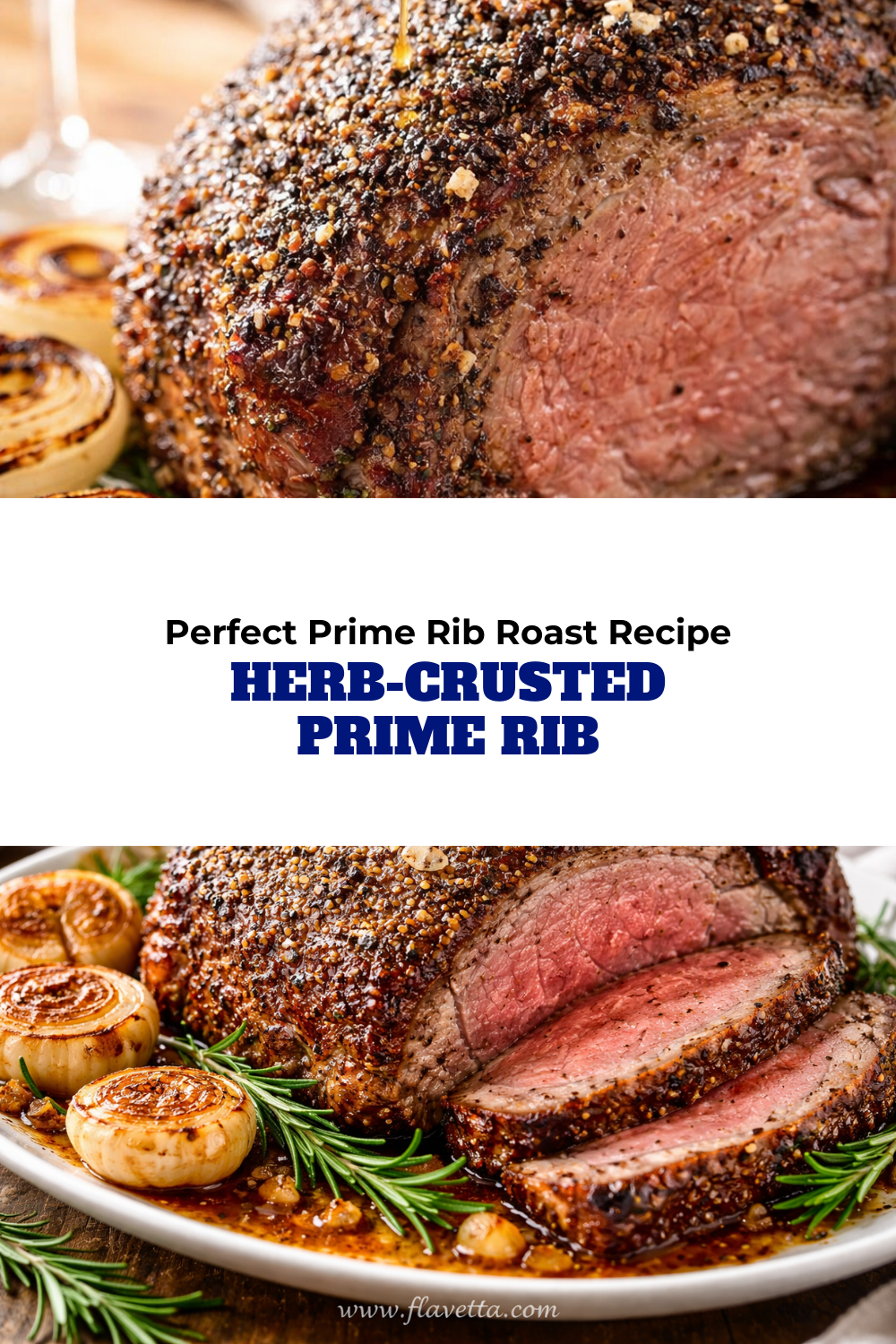
Herb-Crusted Prime Rib

This Herb-Crusted Prime Rib Roast is the ultimate centerpiece for a holiday dinner or special celebration. A generous seasoning of garlic, herbs, and cracked peppercorns creates a flavorful crust while the slow roasting method keeps the meat incredibly tender and juicy inside. The roast begins with a simple dry brine that enhances the natural beef flavor and ensures every slice is perfectly seasoned. Roasted over onions, garlic, and fresh herbs, the drippings become rich and aromatic. Whether served with horseradish sauce or classic sides like mashed potatoes and roasted vegetables, this prime rib roast delivers steakhouse-quality results right from your own kitchen.
Prep Time 30 minutes
Cook Time 2 hours 30 minutes
Course: Dinner, Main Course
Cuisine: American

Ingredients
  

  • Ingredients
  • For the Prime Rib
  • 1 prime rib roast about 10 lb, ribs detached and tied back to the roast
  • 2 tbsp kosher salt Morton’s or about 3½ tbsp Diamond Crystal kosher salt
  • 4 tbsp unsalted butter cut into small cubes
  • Garlic Herb Pepper Rub
  • ¼ cup assorted whole peppercorns
  • ¼ cup olive oil
  • tsp finely chopped fresh rosemary
  • 1 tsp fresh thyme minced
  • ¼ cup chopped garlic avoid pressing the garlic
  • 1 tsp onion powder
  • 1 tsp paprika
  • ½ tsp ground coriander
  • ½ tsp dry mustard powder
  • Aromatic Roasting Base
  • 1 yellow onion quartered (leave the peel on)
  • 1 whole garlic bulb sliced in half crosswise
  • 5 sprigs fresh thyme
  • 3 sprigs fresh rosemary
  • For Serving
  • Horseradish sauce prepared separately

Method
 

Step 1: Salt the Roast (Dry Brine)

Start by patting the prime rib completely dry using paper towels. Sprinkle kosher salt evenly over every side of the meat and gently press it into the surface. Place the roast on a tray, cover loosely with foil, and refrigerate to dry brine. Ideally, let it sit for up to 48 hours for maximum flavor, though even a few hours will improve the seasoning. If you're short on time, simply salt the roast and allow it to sit out while coming to room temperature.

    Step 2: Let the Roast Warm & Prepare the Pan

    Remove the roast from the refrigerator and allow it to sit at room temperature for several hours. A large 10-pound roast usually needs 4–5 hours, while smaller roasts may only need around 3 hours. Preheat the oven to 500°F and position a rack in the lower third. Meanwhile, arrange the onion quarters, halved garlic head, thyme sprigs, and rosemary in the bottom of a roasting pan. These aromatics will act as a flavorful rack for the roast.

      Step 3: Prepare the Herb Pepper Paste

      Crush the peppercorns using a mortar and pestle or spice grinder. Place them in a bowl and add olive oil, rosemary, thyme, chopped garlic, onion powder, paprika, coriander, and mustard powder. Mix everything together until it forms a chunky herb paste.

        Step 4: Coat and Sear the Roast

        Lightly pat the roast dry again. Spread the herb and pepper mixture over the entire roast, making sure all surfaces are coated. Place the roast bone-side down with the fat cap facing up on top of the vegetable bed in the roasting pan. Insert a meat thermometer into the thickest portion of the roast. Roast uncovered at 500°F for 20 minutes to create a beautifully browned crust.

          Step 5: Finish Cooking Low and Slow

          Remove the roast from the oven and reduce the temperature to 250°F. Scatter the butter pieces evenly over the top of the roast. Return it to the oven and continue roasting until the internal temperature reaches about 122°F for medium-rare. Expect roughly 15 minutes per pound, but always rely on a thermometer rather than timing.

            Step 6: Rest and Slice

            Once cooked, remove the roast and spoon the pan juices over the meat. Transfer the roast to a cutting board, tent loosely with foil, and allow it to rest for at least 20 minutes. Resting helps the juices redistribute and keeps the meat incredibly tender. Remove the butcher’s twine, separate the bones, and slice the roast into ½-inch thick portions or your preferred thickness.

              Step 7: Serve

              Arrange the slices on a platter and serve with horseradish sauce, au jus, or a red wine sauce. The sharp, creamy bite of horseradish is a classic companion to rich prime rib.

                Notes

                Ingredient Substitution Ideas

                Even though prime rib is typically reserved for special occasions, a few adjustments can help if you’re missing ingredients.
                Peppercorns: Regular black peppercorns can replace mixed peppercorns without sacrificing flavor.
                Fresh herbs: Fresh rosemary and thyme deliver the best aroma, but dried herbs can work in a pinch. Use smaller amounts since dried herbs are stronger.
                Butter: Salted butter is fine—just reduce the added salt slightly.
                Olive oil: Avocado oil or vegetable oil can substitute easily.
                Spices: Missing paprika, coriander, or mustard powder? The roast will still taste great without them, or you can swap in garlic powder or other spices.

                Common Mistakes to Avoid

                Skipping the room-temperature step: Always let the roast sit out for a few hours before cooking so it cooks evenly.
                Not letting it rest: Cutting immediately releases all the juices. Resting the meat keeps it moist.
                Cooking at only high heat: The best results come from a reverse-sear method—start hot for the crust, then cook low and slow.
                Guessing doneness: Always use a reliable meat thermometer for perfect results.

                What to Serve with Prime Rib

                Since prime rib is already rich and flavorful, classic side dishes work best.
                Creamy mashed potatoes or baked potatoes pair beautifully and soak up the juices. Roasted vegetables like Brussels sprouts, green beans, or glazed carrots bring color and balance.
                A crisp green salad with vinaigrette adds freshness, and traditional Yorkshire pudding is always a crowd-favorite.

                Storage Instructions

                Refrigerating

                Wrap leftover prime rib tightly in foil or store it in an airtight container.
                It will keep well in the refrigerator for up to 4 days.

                Freezing

                Prime rib can be frozen for up to 3 months.
                Wrap slices in plastic wrap, then foil, and store in a freezer bag to prevent freezer burn.

                Reheating

                To warm leftovers, place slices in a baking dish with a little beef broth. Cover with foil and heat in a 250°F oven for about 20 minutes.
                Prime rib is also excellent served cold in sandwiches with horseradish sauce.

                Frequently Asked Questions

                What internal temperature should prime rib reach?

                 For medium-rare, remove the roast at 120–125°F. The temperature will rise to about 130–135°F as it rests.

                How long should prime rib rest before slicing?

                 Let the roast rest at least 20–30 minutes. This step keeps the meat juicy.

                Can I cook a smaller prime rib roast?

                 Yes. A 3–4 rib section works perfectly and cooks faster while using the same method.

                Can prime rib be smoked instead of roasted?

                 Absolutely. A smoker can add incredible flavor. Cook low and slow until the desired internal temperature is reached.

                Do I have to tie the ribs back on the roast?

                 It’s helpful but not required. Tying the ribs helps the roast cook evenly and makes carving easier.

                Final Thoughts

                Prime rib might seem like a restaurant-only dish, but it’s surprisingly approachable at home. With the right seasoning, a reliable thermometer, and a little patience, you can create a roast that’s juicy, tender, and packed with flavor.
                The combination of a quick high-heat sear followed by slow roasting delivers that perfect pink center and crispy crust every time. Add a simple horseradish sauce and classic sides, and you’ve got a holiday-worthy centerpiece that will impress everyone at the table.
                Once you make prime rib yourself, you’ll realize it’s not nearly as intimidating as it sounds—and it may just become your favorite special-occasion dinner.
                Herb-Crusted Prime Rib - 3 Thumbnail